By Rose O. Sherman, EdD, RN, NEA-BC, FAAN
“No one can make you feel inferior without your consent.” – Eleanor Roosevelt
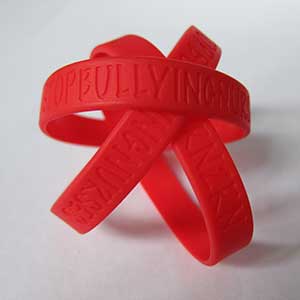
An article in the January 2013 issue of Advance for Nurses describes a new anti-bullying movement started by Cole Edmonson, the Chief Nursing Officer at Texas Health Presbyterian Hospital Dallas and a Robert Wood Johnson Foundation Executive Nurse Fellow. Edmonson believes the key to overcoming bullying begins by strengthening the individual, and helping them to find their moral courage. Edmonson created the website because he felt as though there was no comprehensive resource related to health care on the issue of bullying. The site is a resource for nurses, and a place for nurses to share their stories. Nurses can order red armbands to show their support for this effort.
Edmondson’s efforts and commitment to helping nurses and tackling a serious problem in nursing are commendable. At the end of the article, readers had an opportunity to comment on the story. What struck me as I read the comments were the ones involving nurse leaders. One nurse wrote, “supervisors and administrators are the biggest bullies. I fight back, I pay the price.” Another wrote, “I did not experience bullying in the beginning of my career. However as I gained more experience I began to experience a great deal of horizontal abuse from supervisors and administrators.”
While not all staff complaints about leadership bullying may grounded in fact, we cannot deny that there are nurse leaders who are bullies. As supervisors, nurse leader bullies have the potential to cause significant emotional damage and stress to staff. The signs of a leader who bullies staff could include some or all of the following:
- Very controlling with a need to be informed about every decision and action taken by staff
- Ignoring or refusing staff requests for time off even when it is clearly an important event
- Making belittling comments or criticizing staff in front of others
-
Not sharing important information with staff in an effort to maintain power and control
-
Jumping to conclusions in situations without hearing all sides of a story
-
Showing favoritism and/or intentionally isolating or freezing out certain staff members instead of being inclusive.
-
Making snide or abrupt remarks
-
Giving unwarranted disciplinary actions and verbal warnings
-
Blaming staff for problems that developed with leader mismanagement of a situation
-
Refusing to be available in situations where staff clearly need assistance
-
Engaging in acts of sabotage that deliberately set up certain staff members for a negative situation
-
Raising eyebrows or making faces in response to the comments of colleagues and staff members
-
Failing to respect the privacy of staff when giving feedback
-
Repeatedly telling staff that if they are not happy with their current job, then they should consider leaving
-
Taking credit for the achievements of staff without giving recognition
-
Breaking confidences and gossiping about staff members to other staff
It can be very difficult for an individual staff member to change the behavior of a bully nurse leader. Few nurse leader bullies will bully everyone, but rather focus on selective staff members who are less able to defend themselves. This often includes new graduates or newly hired staff. When there is high turnover on units, the possibility of a bully leader needs to be carefully considered as staff feel powerless and will leave the organization.
Bullying occurs in relationships where the balance of power is believed by both parties to be lopsided. This is why shared governance in nursing can be so powerful. It provides a way to redistribute some of the power that a bully might have in a situation. It also gives staff a voice they might otherwise not have in decision making. Research has shown that when staff receive training on how to respond to bullying, they are more likely to effectively fight back.
When other nurse leaders in the organization see this behavior in their colleagues, they must speak up. The stopbullyingnurses campaign needs to start with a commitment by nurse leaders that they will not demonstrate these behaviors, nor will they tolerate it in their leadership colleagues.
Read to Lead
Brown, T. (February 11th, 2010). When the Nurse is a Bully. New York Times Blog.
Longo, J.,& Sherman, R.O. (2007). Leveling horizontal violence. Nursing Management, 38(3), 34-37; 50-51.
© emergingrnleader 2013


 LinkedIn
 Instagram